
.2611130958312.png)
Is It Termites or Water Damage? Signs Every Homeowner Should Know
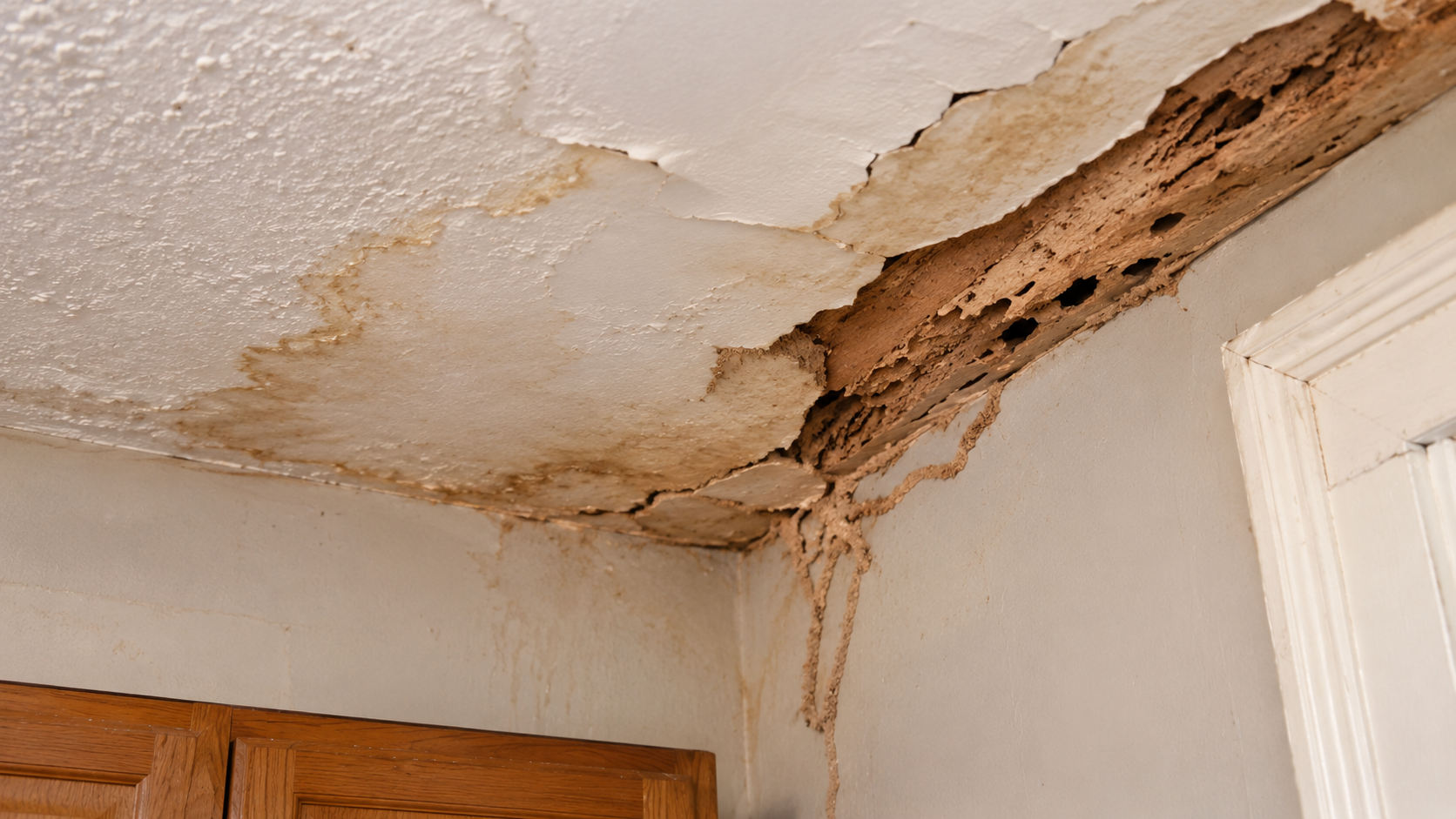
Have you noticed bubbling paint, soft wood, or unusual marks around your home? These could be signs of water damage, but they may also point to a hidden termite problem.
For homeowners in Hilton Head Island, Bluffton, and the surrounding Lowcountry, both issues deserve attention. Our warm, humid coastal climate can create conditions that make moisture problems and termite activity a concern.
The challenge is that termite damage and water damage can sometimes look alike. Knowing the warning signs can help you identify a possible problem and protect your home before the damage gets worse.
Why Termite Damage and Water Damage Can Look Similar
Both termites and excess moisture can affect wooden structures, walls, floors, and other parts of your home.
Water can cause wood to swell, soften, or rot. Termites, on the other hand, feed on wood from the inside, often leaving damage that is difficult to see.
Sometimes, the two problems can even occur in the same area. A leaking pipe or poor drainage may create moisture conditions that make a property more vulnerable to termite activity.
That is why it is important to look beyond the visible damage and understand what may be causing it.
Common Signs of Termite Damage Around Your Home
Termites are often called silent destroyers because they can damage wooden structures from the inside without being noticed. Subterranean termites, common in coastal South Carolina, enter homes through soil and small openings around foundations.
Watch for these common signs of termite damage:
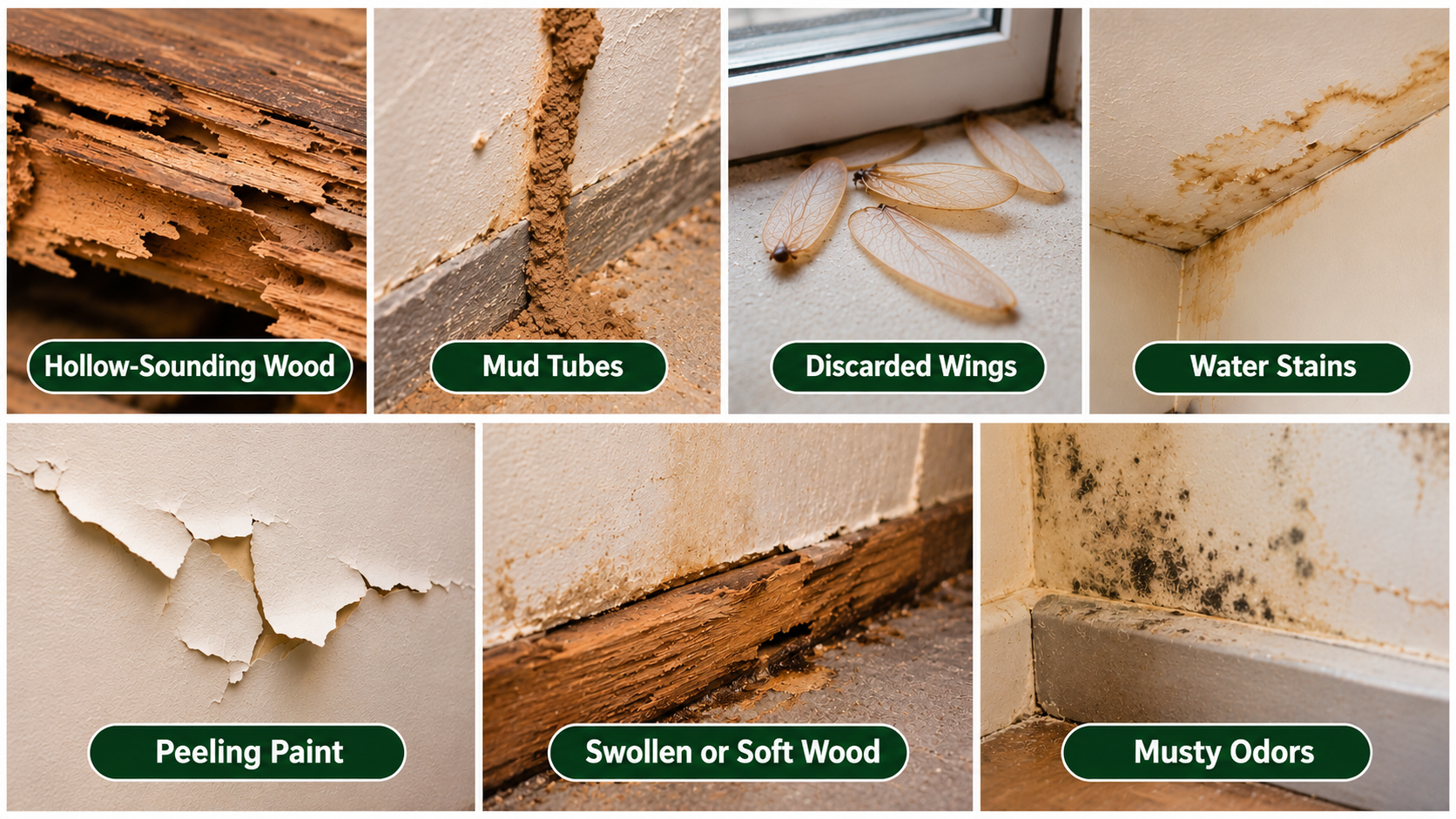
Hollow-Sounding Wood: Wooden floors, door frames, and baseboards may sound hollow when tapped.
Mud Tubes: Small dirt tunnels along foundations, crawl spaces, or walls may indicate subterranean termite activity.
Discarded Wings: Small piles of wings near windows and doors may signal termite swarmers.
Damaged Wood: Cracked, uneven, or blistered wood may indicate hidden termite activity.
Early detection is important because termites can weaken wooden structures over time, even when the damage is not immediately visible.
Common Signs of Water Damage
Water damage occurs when excess moisture enters or collects inside your home. Leaking pipes, roof problems, poor drainage, and heavy rainfall are common causes.
Here are some warning signs to look for:
Water Stains: Yellow or brown spots on walls and ceilings.
Peeling Paint: Bubbling or peeling surfaces caused by excess moisture.
Swollen Wood: Wooden floors, cabinets, and doors may become warped.
Musty Odors: Damp smells may indicate trapped moisture.
Soft or Rotting Wood: Prolonged water exposure can weaken and discolor wood.
Unlike termite damage, water damage often comes with visible stains, leaks, or damp areas. However, excess moisture can also create conditions that attract termites.
If you notice any of these signs, consider having the affected area professionally inspected to identify the cause and prevent further damage.
How to Tell the Difference Between Termite Damage and Water Damage
Although the signs can overlap, there are a few clues that may help you understand what is happening.
Termite damage may include:
Hollow-sounding wood.
Mud tubes along foundations.
Discarded wings near windows or doors.
Hidden tunnels inside wooden structures.
Water damage may include:
Yellow or brown water stains.
Peeling paint or wallpaper.
Swollen or warped wooden surfaces.
Musty smells and visible dampness.
Keep in mind that these signs are not always enough to identify the exact cause. Both problems can occur together, and damaged wood may require a closer professional evaluation.
How to Protect Your Home
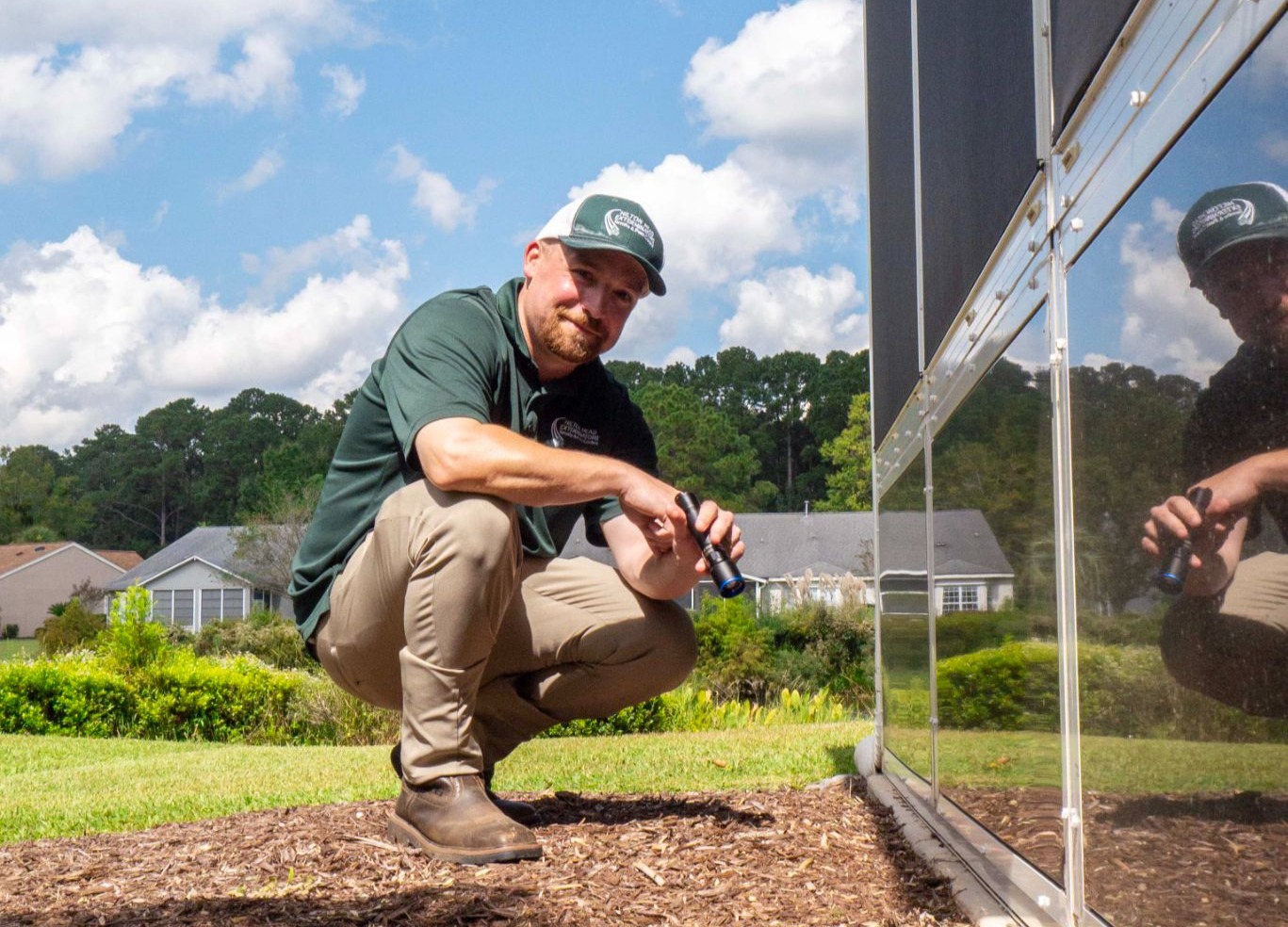
Homes in Hilton Head Island and Bluffton experience coastal humidity and seasonal rainfall. Managing moisture and checking for termite activity should be part of regular home maintenance.
Here are a few ways to help protect your property:
Fix leaks quickly: Repair leaking pipes, faucets, and roof problems before moisture spreads.
Keep gutters clean: Make sure rainwater drains away from your home's foundation.
Avoid standing water: Check around your home for areas where water collects.
Store firewood properly: Keep firewood and wood debris away from the house and elevated off the ground.
Check crawl spaces: Look for excess moisture, damaged wood, or possible termite activity.
Schedule regular inspections: Professional inspections can help identify hidden problems before they become more serious.
These simple steps can help reduce risks, but they do not replace professional termite protection.
Protect Your Home with Professional Termite Inspections
Termites can remain hidden behind walls, under floors, and inside wooden structures. By the time visible damage appears, the problem may already be extensive.
At Hilton Head Exterminators, we understand the termite concerns homeowners face throughout Hilton Head Island, Bluffton, and the surrounding Lowcountry.
Our team provides professional termite inspections and treatment options designed to help protect homes and properties. We use proven solutions, including Termidor and the Sentricon Termite Baiting System, based on each property's needs.
Learn more about our termite control services or our Wood Destroying Organism (WDO) inspection services.
Protect Your Lowcountry Home Before Damage Gets Worse
Protect your Lowcountry home before termite or water damage gets worse. Hilton Head Exterminators provides professional termite inspections and treatment solutions to help homeowners identify termite activity and protect their properties.
If you notice hollow wood, mud tubes, discarded wings, or other signs of termite activity, don't wait for the damage to spread.
Contact Hilton Head Exterminators today to schedule a termite inspection and learn how to protect your home.
Visit Hilton Head Exterminators to get started.
