
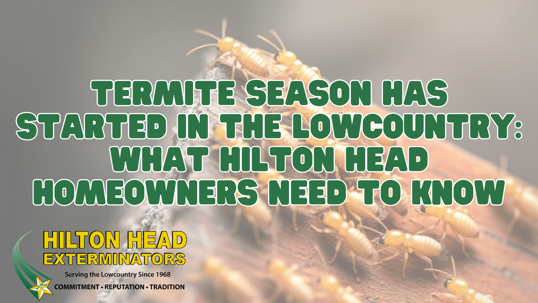
Spring in the Lowcountry means warmer weather, blooming landscapes, and the start of termite season in Hilton Head. While many residents look forward to warmer weather, spring also marks the start of increased termite activity that can threaten homes across Hilton Head Island and the surrounding Lowcountry.
Understanding when termite season begins, what signs to watch for, and how to protect your home can help prevent costly structural damage. If you want more tips on preventing termite problems in the spring, check out our guide on not letting termites spoil your spring in Hilton Head. Here’s what every Hilton Head homeowner should know.
Why Termite Season Starts in the Lowcountry
The Lowcountry’s warm, humid climate creates the perfect environment for termites to thrive. As temperatures rise in late winter and early spring, subterranean termites begin their annual swarming season.
Swarming occurs when reproductive termites leave their colonies to form new ones. In Hilton Head and throughout coastal South Carolina, these swarms typically begin in February and continue through May, often appearing after warm rains.
If you notice flying insects around your home during termite season in Hilton Head, it could mean termites are establishing a colony nearby, or possibly inside your home.
Signs of Termite Activity Around Your Home
Termites are known as “silent destroyers” because they can cause significant damage before homeowners notice a problem. During termite season in Hilton Head, watch for these common warning signs:
1. Flying Termites (Swarmers)
Winged termites emerging inside or around your home are one of the most obvious signs of termite activity.
2. Discarded Wings
After swarming, termites shed their wings. You may find small piles of wings near windows, doors, or light fixtures.
3. Mud Tubes
Subterranean termites build pencil-sized mud tubes along foundations, crawlspaces, and walls to travel between their colony and food sources.
4. Hollow or Damaged Wood
Wood that sounds hollow when tapped or appears blistered or cracked may indicate termites feeding inside.
5. Tight Windows or Doors
As termites damage wood structures, doors and windows may suddenly become difficult to open.
Why Termites Are a Serious Threat to Hilton Head Homes
Termites cause billions of dollars in property damage each year across the United States, and coastal South Carolina is considered a high-risk region.
Hilton Head homes are particularly vulnerable because of:
High humidity levels
Sandy soil ideal for subterranean termites
Abundant wood structures and landscaping
Mild winters that allow termite colonies to stay active year-round
Left untreated, termite colonies can weaken framing, flooring, and support beams, leading to extensive structural repairs.
How to Reduce the Risk of Termites
While professional protection is the most effective defense, homeowners can take steps to make their property less attractive to termites during termite season in Hilton Head.
Helpful prevention tips include:
Keep firewood and lumber away from the home’s foundation
Fix moisture issues in crawlspaces and around foundations
Ensure gutters and drainage direct water away from the home
Seal cracks in the foundation or exterior walls
Schedule regular termite inspections
Because termites often remain hidden, professional inspections are the best way to detect problems early.
The Importance of Annual Termite Inspections
Many termite infestations are discovered only after significant damage has occurred. Annual termite inspections allow professionals to identify activity early and recommend treatment options before colonies grow larger. If termites are discovered, professional termite control in Hilton Head can eliminate the colony and protect your home from further damage.
In areas like Hilton Head Island, where termite pressure is high, routine inspections and preventative treatments are essential parts of responsible home maintenance.
